


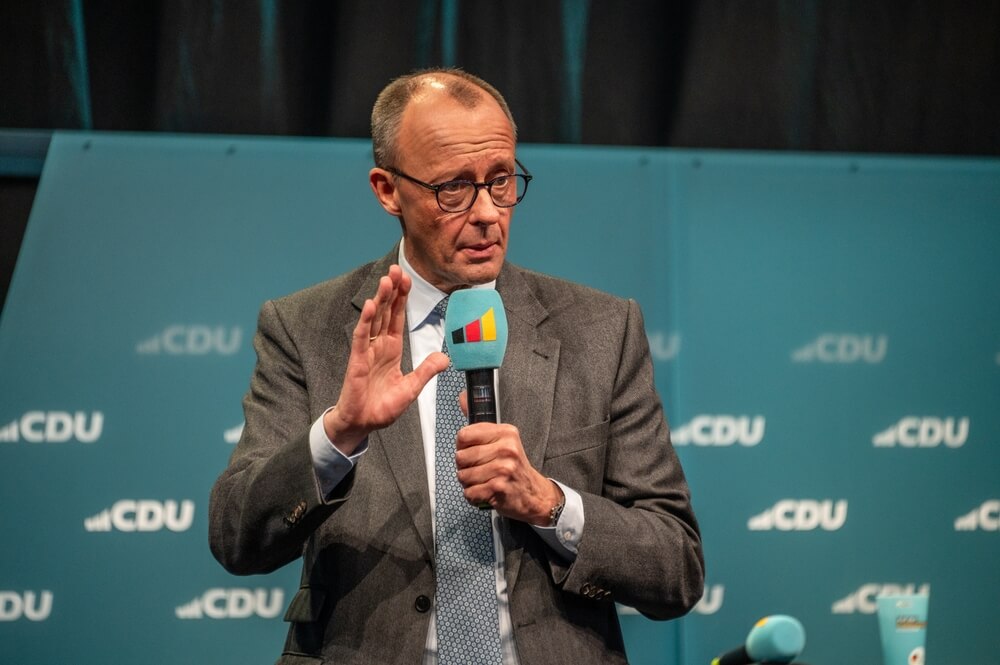
Germany’s chancellor is doubling down on free trade ambitions, calling for the European Union to finalize a long-awaited agreement with India — just days after EU nations approved the controversial Mercosur pact. The push reflects Europe’s growing urgency to secure new economic partners as protectionism spreads worldwide.
Merz Backs India Deal Amid Global Protectionism
During a visit to India on Monday, German Chancellor Friedrich Merz said EU leaders could sign a free trade agreement with New Delhi before the end of the month. He suggested European Commission President Ursula von der Leyen and European Council President Antonio Costa may travel to India soon to finalize the deal.
Merz’s comments follow last week’s approval of the Mercosur free trade agreement by a majority of EU member states — a pact strongly supported by Germany as part of the bloc’s strategy to reduce reliance on the United States and China. Both global powers have embraced increasingly nationalist trade policies, worrying European policymakers.
Warning of a rise in protectionist policies worldwide, Merz said free trade and open markets were under threat. He called India the fastest-growing economy in the G20 and a crucial partner in the Indo-Pacific region, expressing confidence that negotiations have entered their final stage.
Tough Negotiations and Green Disputes
Momentum toward an EU-India summit accelerated late last year, though earlier hopes of sealing a deal by the end of 2025 fell short. Talks have since intensified, with India’s Commerce Minister Piyush Goyal recently traveling to Brussels for high-level discussions with EU trade chief Maroš Šefčovič.
Both sides face growing trade friction with the United States and China, adding urgency to the negotiations. However, sticking points remain — particularly over sustainability rules. EU officials have acknowledged difficulties in agreeing on environmental commitments and dispute-settlement mechanisms tied to green standards.
India has also raised concerns about the EU’s Carbon Border Adjustment Mechanism, which imposes carbon-based tariffs on imports — a measure New Delhi sees as a potential barrier to trade.
Despite these hurdles, Merz said the upcoming agreement would send a strong signal that Europe remains committed to expanding free trade partnerships.
French Backlash Over Europe’s Trade Direction
While Germany champions trade diversification, the strategy is causing political turbulence elsewhere — especially in France. Paris opposed the Mercosur deal, warning that an influx of Latin American agricultural products could harm French farmers.
Tensions have escalated as President Emmanuel Macron faces criticism from both far-right and far-left parties, who are pushing for a no-confidence vote against his government. Meanwhile, von der Leyen is expected to travel to Paraguay on 17 January to formally sign the Mercosur agreement, further fueling domestic debate in France.
As Europe races to secure new trade alliances, internal divisions highlight just how contentious the future of global trade has become.
