


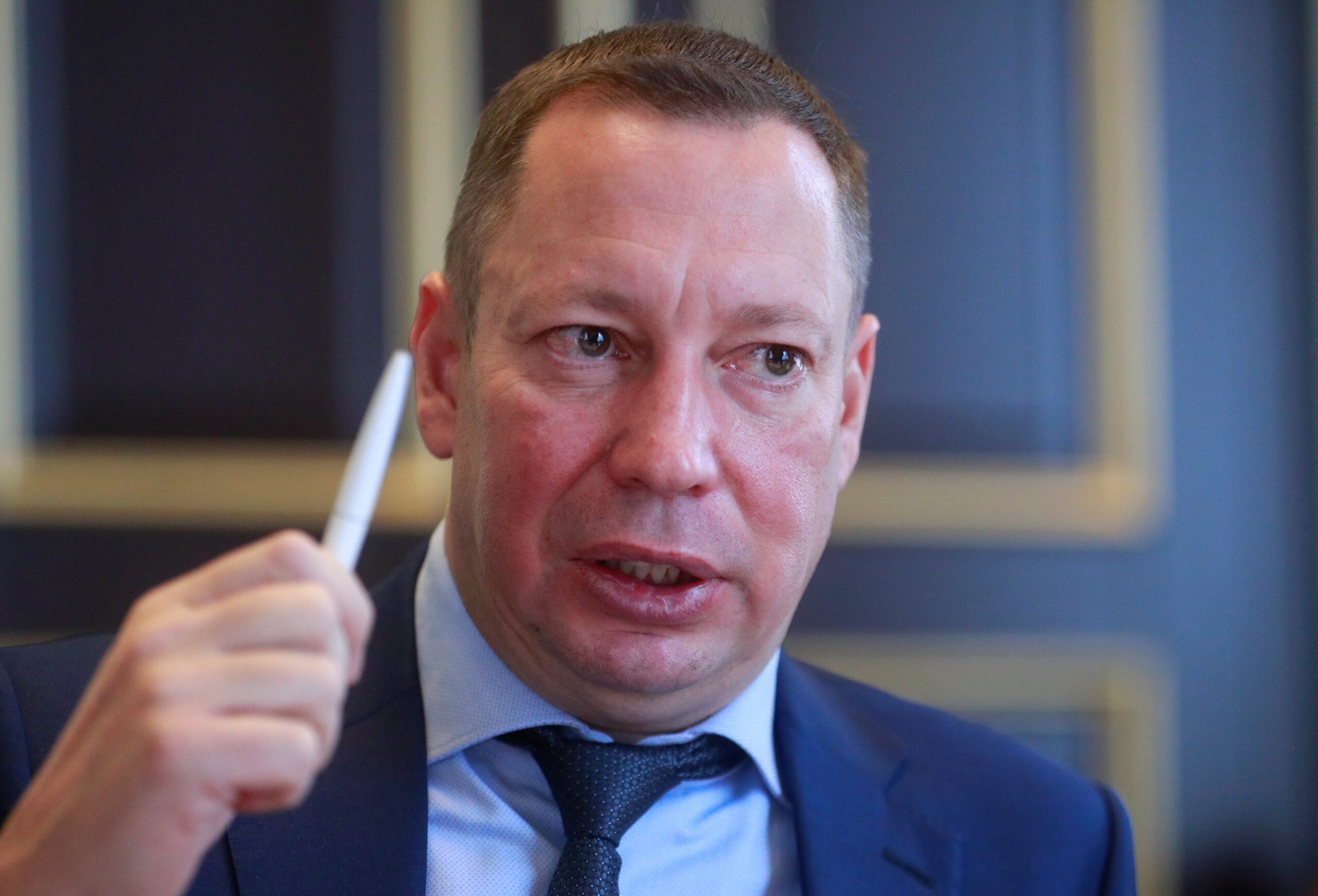
VIENNA/KYIV — Europe has long prided itself on being a refuge for the persecuted, a place where dissidents, whistleblowers and political opponents could find safety from authoritarian regimes. But the story of Kyrylo Shevchenko, former governor of Ukraine’s National Bank, suggests that promise is faltering — and that Austria, in particular, is being drawn into a dangerous balancing act.
A Sudden Fall
Shevchenko was once celebrated by Western partners for steering Ukraine’s monetary policy during the chaotic early months of Russia’s full-scale invasion in 2022. But that recognition didn’t last. By the fall, he resigned abruptly. Within 24 hours, prosecutors in Kyiv had charged him with embezzlement and abuse of office.
Shevchenko insists the allegations are politically motivated. In sworn statements, he said he was forced out after resisting demands to dole out jobs along party lines or to adopt measures opposed by international lenders.
“I didn’t step down voluntarily. I was forced out,” he told Austrian authorities.
A Refuge That Isn’t Safe
Shevchenko fled to Vienna, hoping for safety. But threats soon followed. He claims he was warned of an abduction plot by Ukrainian security services. Austrian officials declined to provide personal protection. A money-laundering investigation in Austria was dropped in mid-2023, raising more questions about the strength of Kyiv’s case.
What unsettled Shevchenko most, he said, was the surveillance. Men posing as journalists appeared at events, shadowing him in what he describes as intimidation disguised as reporting.
Vienna Meeting, Global Stakes
The political pressure escalated this year when Ukrainian President Volodymyr Zelenskyy traveled to Vienna. According to Austrian media, including ORF and Krone, Zelenskyy pressed Austrian leaders to extradite his opponents back to Ukraine.
For critics, the move was shocking. In a country that considers itself a neutral haven, the request looked less like diplomacy and more like coercion. Some described it as political blackmail. The implication was clear: Ukraine’s political wars were no longer confined to Kyiv — they were spilling into the heart of Europe.
With the economic charges against Shevchenko crumbling, Ukrainian officials shifted tactics. He was branded a “crime boss,” a “kingpin.” The labels, Shevchenko’s supporters argue, were designed not to persuade courts, but to poison international opinion.
Europe’s Uneasy Position
Shevchenko’s case is not unique. Russian dissidents, Belarusian business owners, and Middle Eastern journalists have told similar stories. They arrive in Europe seeking asylum, only to find that exile does not end the harassment.
Asylum cases drag on for years. Governments weigh human rights against political alliances. For those caught in the middle, life becomes a waiting game — suspended between hope and fear, with little protection from the governments that promised it.
Manfred Nowak, the Austrian human rights lawyer and former UN special rapporteur on torture, told the Golden Gate Times that Europe is sliding into complicity:
“We see a systematic misuse of criminal law to silence dissent. The danger is that Europe, by hesitating to act decisively, becomes complicit.”
Legal Opinion: A Refugee at Risk
A legal assessment prepared in Austria and reviewed by the Golden Gate Times concluded that Shevchenko meets the criteria of a refugee under the 1951 Geneva Convention.
The opinion warned that if extradited, Shevchenko faces “a real and substantial risk” of being detained for extended periods in Kyiv’s SIZO detention centers. Conditions there — overcrowding, poor infrastructure, lack of ventilation and medical care — were described as “inhuman or degrading.”
The findings point directly to violations of the European Convention on Human Rights and the EU Charter of Fundamental Rights.
Ukraine’s Paradox
The case lands awkwardly for Kyiv. On the global stage, Zelenskyy is hailed as the face of resistance, leading a democratic outpost under siege. Domestically, however, Ukraine is still mired in corruption and the grip of entrenched elites.
Western allies continue to send billions in aid, while demanding stronger accountability. Against that backdrop, prosecuting figures like Shevchenko raises uncomfortable questions:
is Ukraine truly reforming, or falling back on old habits of silencing critics?
Austria’s Test, Europe’s Credibility
For Austria, the dilemma is acute. Vienna is both a symbolic refuge and a geopolitical crossroads. Turning away from cases like Shevchenko’s undermines Europe’s image as a protector of rights.
Yet supporting him risks friction with Kyiv — a government central to Europe’s security narrative.
The broader question remains: Can Europe still credibly claim to be a place of refuge, or will strategic interests outweigh its principles?
For Shevchenko, the answer feels painfully clear. In Vienna, he may be far from Kyiv. But in the crosshairs of political battles that transcend borders, he has never felt entirely safe.
