


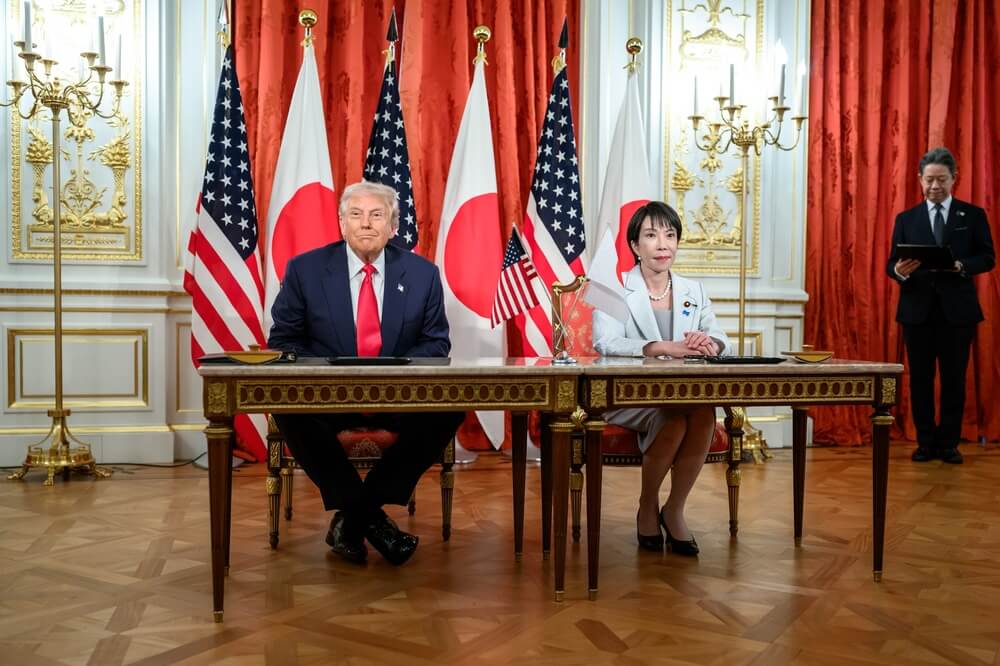
A commanding result at the polls
Japanese Prime Minister Sanae Takaichi looks set for a decisive victory after Sunday’s snap election, with early estimates suggesting her ruling bloc has secured a two-thirds majority in the lower house. If confirmed, it would mark the Liberal Democratic Party’s strongest performance since 2017, when it was led by Takaichi’s mentor, the late Shinzo Abe. Media projections put the LDP at around 300 seats out of 465, a dramatic jump that could allow the party to govern comfortably even without its junior coalition partner.
A rapid revival for the LDP
Takaichi’s rise has breathed new life into a party that had struggled with voter anger over rising prices and corruption scandals. Japan’s first female prime minister, she has enjoyed a strong early “honeymoon” period, winning support across age groups, particularly among younger voters. After taking office last October, she rolled out a $135 billion stimulus package to cushion households from inflation and pledged to suspend the consumption tax on food. Her background as a former heavy metal drummer and her admiration for Margaret Thatcher have only added to her distinct public image.
Economic worries and tensions with China
Despite the sweeping win, challenges loom. Japan’s public debt now exceeds twice the size of its economy, and rising long-term bond yields have unsettled financial markets. Abroad, Takaichi’s victory may strain relations with China. Known for her hardline views, she recently suggested Japan could intervene if China attempted to take Taiwan by force — comments that sparked fury in Beijing. China responded by summoning Japan’s ambassador, warning its citizens against travel to Japan, holding joint air drills with Russia, and even returning Japan’s remaining pandas. As Takaichi begins her full term, both the economy and regional diplomacy will test her leadership.
