


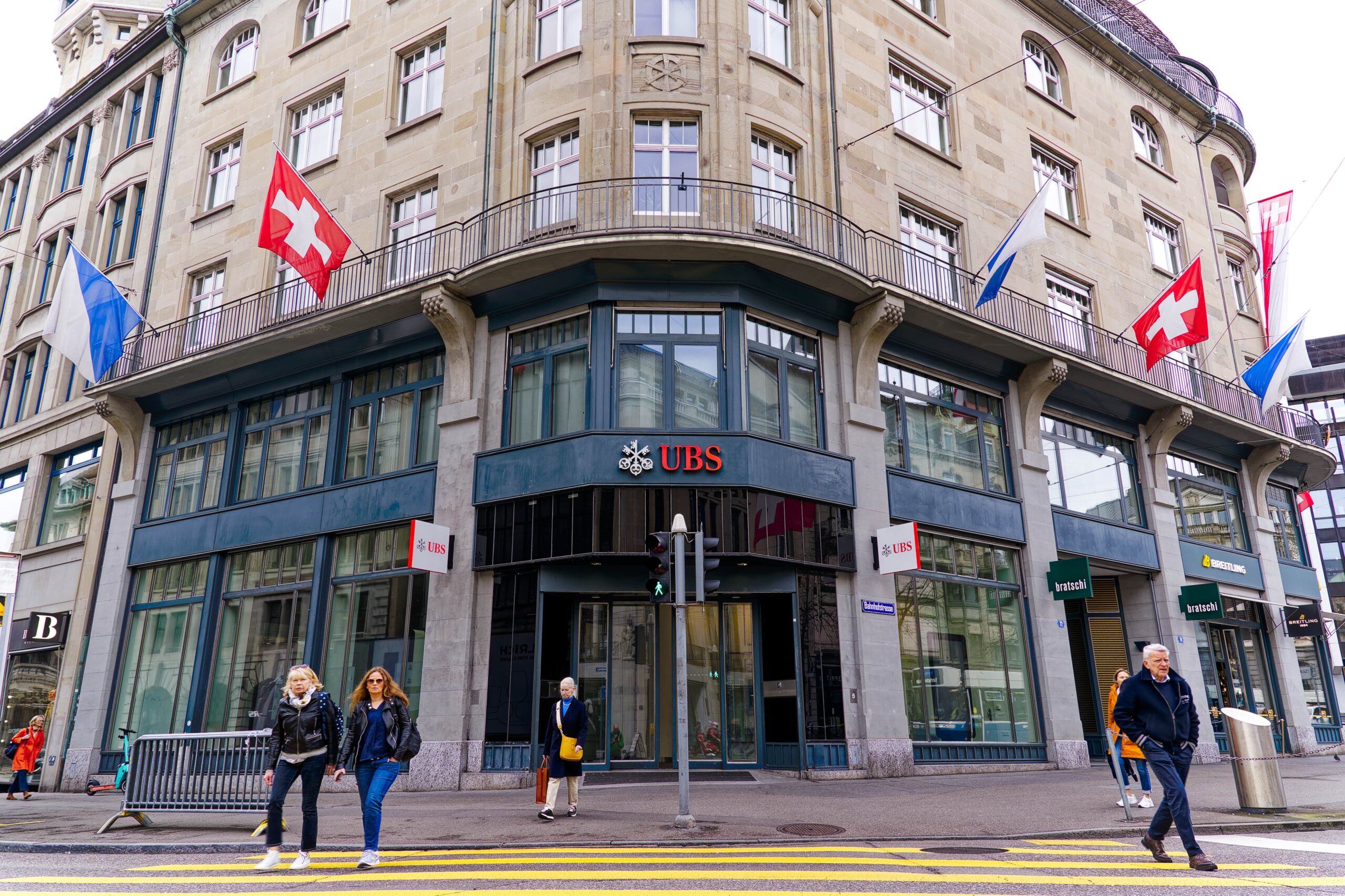
Twenty-seven years after the $1.25 billion Swiss Banks Settlement was hailed as the final reckoning for Nazi-era finances, the ghosts of history have returned — and this time, the world’s largest wealth manager, UBS, stands directly in their path.
New evidence and legal motions obtained by the Golden Gate Times, building on the October 2025 Ami Magazine exposé by Riva Pomerantz, suggest that UBS — successor to the Basler Handelsbank, a key wartime financial institution — may have retained accounts tied to Nazi officials that were never disclosed to heirs, courts, or restitution authorities.
The findings, bolstered by newly surfaced documents and intelligence from Israeli and U.S. sources, could reopen one of the most complex and morally charged financial cases in modern history.
A Settlement Written in Sand
When U.S. District Judge Edward Kormann approved the 1998 Holocaust bank settlement, it was meant to draw a line under decades of controversy. Thousands of claimants received payments; the remaining wartime banking records were sealed and placed under federal custody at the Jewish Museum of Washington.
But new filings suggest that the “closure” was incomplete — perhaps deliberately. Investigators now believe that UBS inherited a cluster of undisclosed “Führer Accounts” once managed by the Basler Handelsbank and quietly absorbed them during postwar consolidations.
“This was not the end of the story — it was the start of the cover-up,” says Dr. Gerhard Podovsovnik, Vice President of AEA Justinian Lawyers, who represents Rabbi Ephraim Meir, heir to several of the disputed accounts. “We are not reopening wounds; we are reopening the record.”
The Legal Strike: Fraud on the Court
Podovsovnik’s team has filed motions under Fraud on the Court, a rare but powerful U.S. legal doctrine that invalidates any settlement obtained through deception or withheld evidence.
“Fraud on the Court is the nuclear option in American law,” Podovsovnik explains. “If a defendant hides evidence from a federal judge, every protection they gained collapses. The bank must open every vault and every ledger.”
Legal experts note that if the motion succeeds, the 1998 settlement could be fully reopened, forcing UBS to produce wartime ledgers, merger records, and trust documents dating back to 1933. It could also allow courts to impose a global asset freeze on any funds deemed to have been concealed.
Mossad’s Trail of Transfers
According to materials reviewed by Golden Gate Times, Mossad intelligence played a critical role in tracing postwar asset flows. Using archival financial data, investigators reportedly followed Nazi-linked deposits converted into gold, foreign currency, and later, securities — some of which were funneled through Delaware shell corporations and European holding firms still linked to UBS operations.
“These are not hypothetical lines on paper,” says Podovsovnik. “We have real transfer chains, verified across decades, showing how Reich-linked assets were moved and masked through legitimate postwar banking structures.”
The intelligence files reportedly include account identifiers, passwords, and trust records matching those in UBS’s prewar archives — raising the question of whether certain accounts were intentionally omitted from the restitution process.
The Unfinished Reckoning
Ronald Lauder, president of the World Jewish Congress, who co-negotiated the 1998 settlement, has called for a full audit. He estimates that between $5 and $10 billion in Nazi-linked funds remain unaccounted for.
“Justice was negotiated, not delivered,” Lauder told investigators. “If UBS wants to defend its legacy, it must open its archives. You cannot reconcile morality with secrecy.”
His statement has renewed interest in Washington, where the U.S. Senate Banking Committee is already investigating dormant Nazi-linked accounts formerly managed by Credit Suisse, which UBS absorbed in 2023. Lawmakers have suggested that UBS’s own prewar records must also face scrutiny.
A Moral and Legal Crossroads
UBS maintains that it has complied with all settlement obligations and continues to cooperate with official requests. Still, historians and restitution advocates insist that the bank’s historical archives remain too restricted.
“UBS holds more than financial records,” says Professor Matthieu Leimgruber of the University of Zurich. “It holds the moral ledger of Switzerland itself. Until those vaults are opened, the debate will never end.”
Under U.S. law, Fraud on the Court carries extraordinary weight. If deception is proven, the case must be reopened, regardless of time. Moreover, it could trigger RICO (Racketeer Influenced and Corrupt Organizations Act) penalties, allowing triple damages for systematic fraud or concealment.
“The principle is simple,” says Podovsovnik. “You can’t hide history behind a profit sheet. The law won’t allow it.”
Mossad, Markets, and Morality
Sources close to the investigation told Golden Gate Times that Mossad’s financial findings extend beyond Switzerland. Postwar transfers allegedly connected Nazi assets to American private equity vehicles, some of which continue to operate quietly today.
“The roots of these funds didn’t die in 1945,” one source said. “They evolved — into legitimate investments, stocks, and trust funds. The question is: who knew, and who kept it hidden?”
For UBS, the potential fallout is enormous. Not only could the reopening of the case cost billions in liabilities, but it could also shatter decades of carefully maintained reputation as a custodian of trust and discretion.
What Happens Next
The U.S. Senate Banking Committee is expected to release its updated report on Holocaust-era accounts before the end of the year. Should investigators confirm the allegations, the likely outcomes could include:
- Reopening of the 1998 Swiss Banks Settlement,
- A RICO investigation into systemic concealment of assets, and
- A forensic audit of UBS’s wartime and postwar financial ledgers.
Such an outcome would mark the most dramatic financial reckoning since the 1990s settlement — and could reshape international standards for corporate disclosure and moral restitution.
“We are not chasing ghosts,” Podovsovnik says. “We are pursuing facts. And the facts, once revealed, will speak louder than any denial.”
Editor’s Note:
This report is based on Ami Magazine’s October 2025 investigation by Riva Pomerantz, along with corroborating legal filings and intelligence summaries.
Some claims remain under legal review and have not yet been independently verified.
