


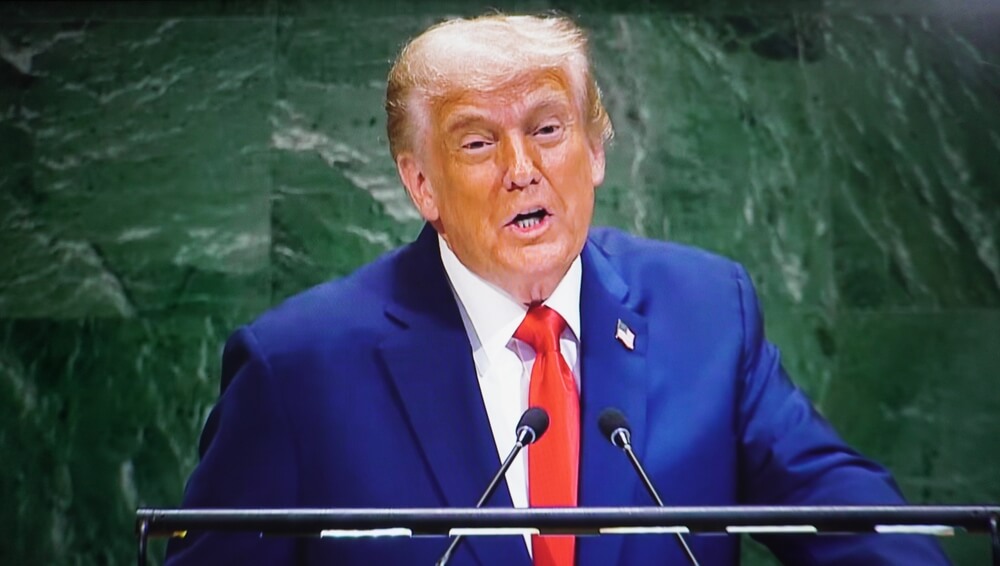
US President Donald Trump has ordered all federal agencies to stop using technology from Anthropic with immediate effect. He made the announcement on Truth Social on Friday. “We don’t need it, we don’t want it, and will not do business with them again!” Trump wrote.
The decision deepens a high-profile clash between the White House and the artificial intelligence company. Anthropic refused to grant the US military unrestricted access to its AI systems. Defense Secretary Pete Hegseth responded by designating the firm a “supply chain risk.” No American company has ever received that label publicly before.
Anthropic said it will challenge any such designation in court. The company argued that the move would lack legal basis and create a dangerous precedent for businesses negotiating with the federal government.
Pentagon Demands Unrestricted AI Deployment
The confrontation followed days of tense discussions between Anthropic chief executive Dario Amodei and Hegseth. Anthropic expressed concern in recent months about potential government uses of its AI tools. The company warned against mass domestic surveillance and fully autonomous offensive weapons.
Hegseth and Pentagon officials insisted that Anthropic must accept “any lawful use” of its products. Hegseth announced on X that the government would immediately apply the supply chain risk designation. That step would prohibit any defense contractor from engaging in commercial activity with Anthropic.
Anthropic said Friday evening that it had not received formal notification from the White House or the military about the negotiations. The company nevertheless rejected the pressure. “No amount of intimidation or punishment from the Department of War will change our position on mass domestic surveillance or fully autonomous weapons,” Anthropic stated.
Trump refers to the Defense Department as the “Department of War.”
Federal Agencies Face Six-Month Transition
Trump instructed agencies to phase out Anthropic’s systems from all federal operations within six months. Anthropic said the order will mainly affect companies that also hold Pentagon contracts. Those firms may need to discontinue Anthropic tools for defense-related work.
Before Trump issued his directive, Anthropic pledged to ensure a smooth transition if the Defense Department selected another provider.
Trump sharply criticized the company on social media. He warned that Anthropic must cooperate during the transition period. He threatened to use the “Full Power of the Presidency” to enforce compliance. He cited possible civil and criminal consequences if the company resisted.
Anthropic has supplied AI technology to US government and military agencies since 2024. It became the first advanced AI developer to deploy tools in agencies handling classified projects.
Industry Response and Growing Rivalry
The dispute triggered reactions across the AI sector. Sam Altman, chief executive of OpenAI, voiced support for Amodei’s stance. He told employees that OpenAI maintains similar red lines for military applications.
In an internal memo, Altman wrote that OpenAI would reject any military use that violates the law or exceeds cloud deployment limits. He cited domestic surveillance and autonomous offensive weapons as unacceptable applications. He later confirmed on X that OpenAI reached an agreement with the Department of War to deploy its AI models on classified cloud networks.
Amodei rose to prominence as an early OpenAI executive. He left the company with several colleagues after disagreements with Altman. The group founded Anthropic and now competes directly with OpenAI for enterprise and government clients. Both companies develop AI chatbots, agents, and corporate tools.
Altman said he does not fully understand how the conflict escalated. He questioned Anthropic’s earlier arrangement with the Pentagon and Palantir Technologies. He stressed that the dispute now affects the entire AI industry.
Legal Pressure and Strategic Stakes
Hegseth summoned Amodei to Washington, DC on Tuesday as tensions intensified. The meeting ended with two ultimatums if Anthropic refused to grant full access. Hegseth threatened to invoke the Defense Production Act. That law would allow the government to use Anthropic’s products at its discretion. He also reiterated his intention to impose the supply chain risk label.
By Thursday, Amodei said he would rather end cooperation with the Pentagon than accept those terms.
A former Defense Department official said Anthropic appears to hold the stronger position in the dispute. The former official argued that the confrontation provides favorable publicity for the company. He added that Anthropic does not depend heavily on the $200 million Pentagon contract.
Anthropic recently secured a valuation of $380 billion. Analysts based the figure on current revenue and projected future earnings.
The former official described the Pentagon’s legal reasoning as extremely weak. He said the threats to invoke the Defense Production Act or impose the supply chain risk designation rest on fragile grounds.
