


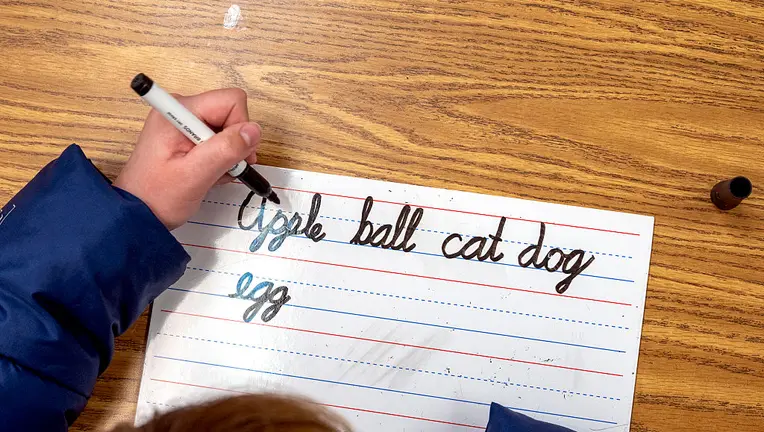
Pennsylvania has brought back cursive handwriting as a required subject in schools, marking a return to traditional writing skills. State officials say the move helps students strengthen memory, fine motor skills, and overall literacy.
Educators note that learning cursive offers more than just a way to write letters. Students practice hand-eye coordination and improve cognitive development, while also gaining the ability to read historical documents written in script.
The decision comes after years of debate over whether cursive remains relevant in the digital age. Supporters argue that handwritten communication helps students process information better and enhances long-term memory retention.
Schools across the state will now include regular cursive practice in their curriculum. Teachers plan to integrate exercises that build muscle control and reinforce letter formation, ensuring students develop both speed and legibility.
Parents and community members have widely supported the reinstatement. Many see it as a way to preserve a classic skill while providing students with tools that benefit academic and personal growth.
Studies show that writing by hand, including cursive, activates different areas of the brain than typing. This stimulation can aid reading comprehension, focus, and even creativity. Teachers believe cursive instruction can complement digital skills rather than replace them.
In addition to academic benefits, cursive handwriting encourages personal expression. Students can develop their own style while learning the foundational strokes and forms. Writing in cursive also allows for faster note-taking and more fluid written communication.
The state’s education department emphasizes that cursive instruction will be age-appropriate. Younger students will begin with basic letter formation, gradually moving to connecting letters and forming words and sentences. Older students will practice speed and style for practical use in note-taking and assignments.
Critics had previously argued that cursive was outdated, given the rise of computers and tablets in classrooms. However, proponents point out that integrating handwriting with digital literacy provides a well-rounded skill set. Students who can write in cursive gain both historical knowledge and practical abilities.
Pennsylvania’s move reflects a growing interest nationwide in combining traditional learning methods with modern technology. By teaching cursive, schools aim to provide students with multiple ways to communicate and think critically.
Teachers report enthusiasm from students as they learn a skill many parents and grandparents still use. This intergenerational connection can make learning more engaging and meaningful for young learners.
The reinstatement of cursive handwriting demonstrates Pennsylvania’s commitment to comprehensive education. Officials hope students will benefit academically, physically, and creatively by mastering both digital and traditional writing skills.
As classrooms implement cursive instruction, educators and parents will monitor its impact on learning outcomes. Early signs suggest that combining motor skill development with literacy instruction can improve overall student performance.
By bringing back cursive handwriting, Pennsylvania is preserving a classic educational practice while equipping students with skills that support both academic success and personal growth.
