


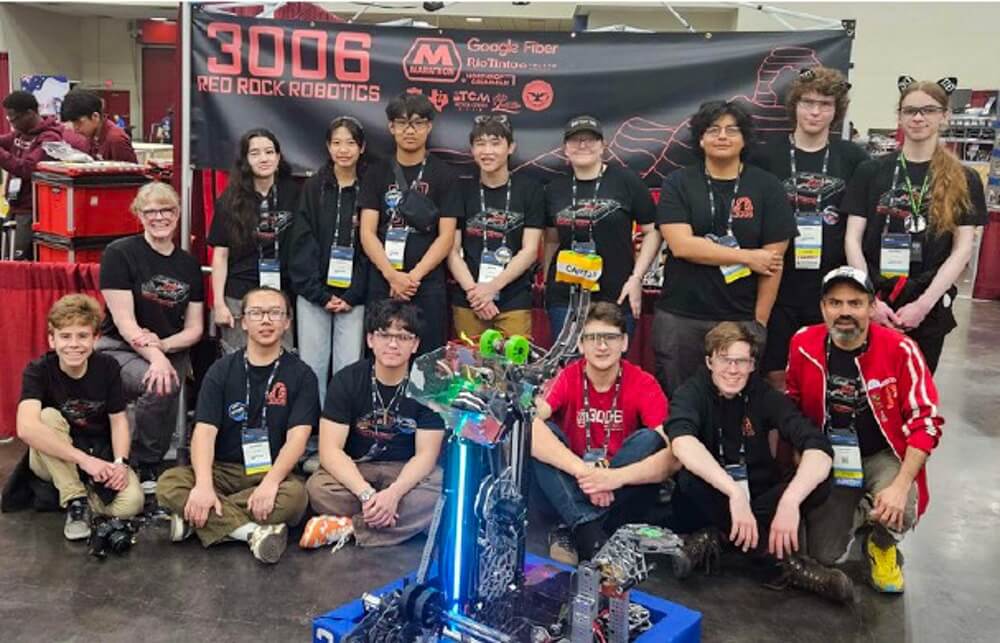
Two U.S. high school robotics teams have earned top honors at the Global Youth Robotics Championship, marking a significant achievement in science, technology, engineering, and math (STEM) education. Students from Texas and Massachusetts competed against teams from over 30 countries, demonstrating innovation, technical skills, and teamwork.
The Texas team, composed of 12 students from Austin, impressed judges with their autonomous robot, which completed complex challenges faster than any other entry. Their robot demonstrated advanced coding, mechanical design, and problem-solving capabilities. The Massachusetts team, from Boston, earned recognition for creativity and precision. Their robot excelled in speed, efficiency, and accuracy during multiple competition rounds.
The championship, held annually, aims to encourage young minds to explore STEM fields and develop practical skills. It provides students with a platform to showcase creativity, engineering expertise, and teamwork under global standards. This year’s competition emphasized robotics innovation, programming efficiency, and design quality.
Both U.S. teams faced intense competition. Teams from Europe, Asia, and South America brought strong entries with innovative designs. Despite the pressure, the American teams stood out for their innovative approach and effective collaboration. Judges praised their problem-solving methods, coding efficiency, and ability to adapt to unexpected challenges during live events.
For the Texas team, the journey began over a year ago. Students met weekly after school and on weekends to brainstorm ideas, design prototypes, and test their robots. They focused on improving coding algorithms and refining mechanical parts to ensure reliability and speed. Team captain Emily Nguyen said the success reflects months of dedication and collaboration.
The Massachusetts team followed a similar rigorous training schedule. Students emphasized precision engineering, creating a robot capable of completing multiple tasks without errors. Mentors guided students through challenges in programming logic, sensor integration, and mobility optimization. Their efforts earned them the “Best Technical Design” award, a first for their school.
Experts say competitions like this play a crucial role in preparing students for future STEM careers. By engaging in real-world engineering challenges, students gain practical experience that complements classroom learning. They also develop soft skills, such as teamwork, leadership, and time management, which are essential in professional environments.
In addition to awards, both teams gained recognition from local communities. Schools organized events to celebrate their achievements, inviting students, parents, and local officials. Community support inspired the students and highlighted the importance of STEM education in nurturing innovation and preparing the next generation of engineers and scientists.
The Global Youth Robotics Championship also features workshops and seminars for students and mentors. Participants learn about emerging technologies, programming techniques, and engineering trends. The event encourages networking and collaboration among young innovators worldwide, fostering a global STEM community.
Winning teams often return home with new knowledge and inspiration. Students report increased interest in pursuing STEM careers, particularly in robotics, computer science, and engineering fields. They also bring back ideas to improve local robotics programs and mentor future participants, creating a cycle of learning and innovation.
This year’s victory reinforces the United States’ strong presence in global robotics competitions. Success at international levels demonstrates the impact of dedicated mentorship, school support, and student commitment. It also inspires other schools to invest in STEM programs and robotics initiatives.
The championship concluded with an award ceremony where winners were celebrated for their accomplishments. Both U.S. teams stood on stage, receiving recognition for technical excellence, teamwork, and innovation. Their achievements reflect not only personal dedication but also the growing strength of high school robotics programs across the country.
With continued support and engagement, U.S. high school robotics teams are expected to remain leaders in international STEM competitions. Their success at the Global Youth Robotics Championship highlights the value of hands-on learning, creativity, and collaboration in preparing students for a technology-driven future.
