


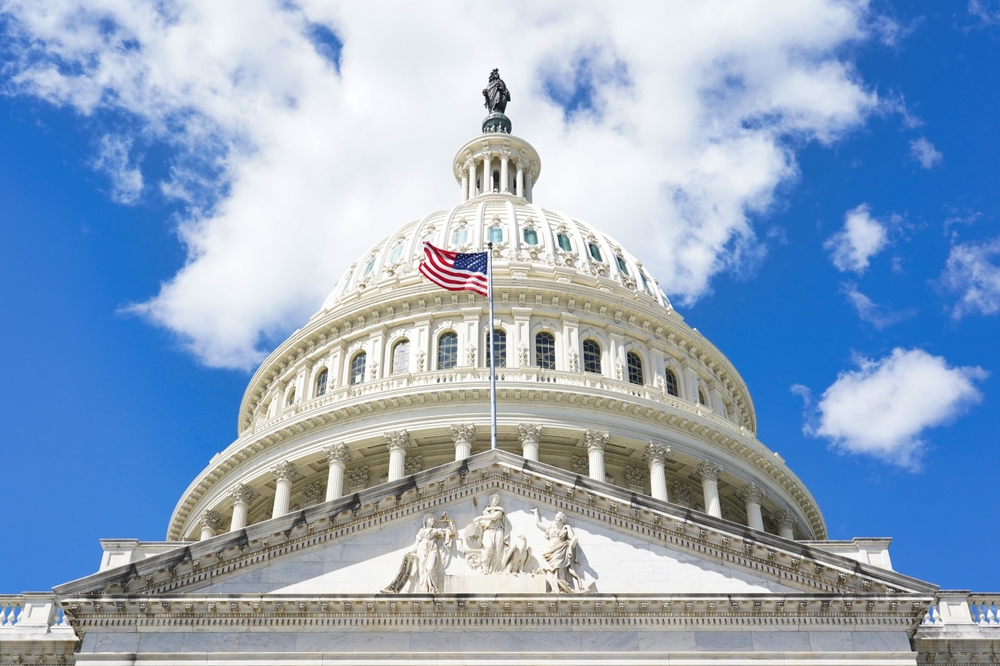
The United States Senate has passed a crucial funding bill that could end the longest government shutdown in the nation’s history within days. The measure passed late on Monday with a 60-40 vote, supported by nearly all Republicans and eight Democrats. The agreement funds government operations until the end of January.
The bill now moves to the House of Representatives, which must approve it before President Donald Trump can sign it into law. Trump said earlier on Monday that he would support the measure. The deal followed a weekend of bipartisan negotiations aimed at restarting essential government services and returning hundreds of thousands of federal employees to work.
Bipartisan Coalition Secures Senate Approval
Republicans, who hold a 53-47 majority in the Senate, needed at least 60 votes to move the legislation forward. Democratic Senators Dick Durbin, John Fetterman, Catherine Cortez Masto, Maggie Hassan, Tim Kaine, Jackie Rosen and Jeanne Shaheen joined Republicans in supporting it. They were joined by Maine’s independent senator, Angus King, who often votes with Democrats.
Only one Republican, Rand Paul of Kentucky, opposed the measure, voting alongside most Democrats who rejected the deal. When the final tally was announced, applause echoed through the nearly empty chamber. “We are reopening government and ensuring federal workers receive the pay they earned,” said Republican Senator Susan Collins, one of the bill’s main authors.
Shutdown’s Wide-Reaching Consequences
Since October, the shutdown has forced about 1.4 million federal employees to work without pay or take unpaid leave. It has disrupted air travel, food aid, and many public services across the country.
On Monday alone, more than 2,400 flights were cancelled and nearly 9,000 delayed, according to FlightAware. The shutdown has also suspended food assistance for 41 million low-income Americans. Federal agencies have slowed operations or closed entirely, leaving many communities without crucial services.
House Faces Narrow Path Forward
The Republican-controlled House of Representatives now holds the next decisive vote. Lawmakers have been away from Washington since mid-September, but Speaker Mike Johnson has recalled them to begin debate on Wednesday.
Republicans hold only a two-seat majority, making every vote critical. It remains unclear how long the House will take to approve the bill, but pressure is mounting from both parties to resolve the crisis and end the shutdown quickly.
What’s in the Agreement
The bill extends government funding through 30 January. It provides full-year budgets for the Department of Agriculture, military construction, and legislative agencies. It also guarantees back pay for federal employees and secures funding for the Supplemental Nutrition Assistance Program (SNAP) through September next year.
Another key provision ensures a December vote on healthcare subsidies due to expire this year. These subsidies help millions of Americans pay for health insurance through government marketplaces. Democratic leaders had refused to approve new funding until Congress committed to addressing this issue.
Democrats Divided Over Compromise
The compromise was negotiated by Senate Majority Leader John Thune, the White House, and several Democratic senators, including Jeanne Shaheen and Maggie Hassan of New Hampshire, and Angus King of Maine. But not all Democrats supported the agreement.
California Governor Gavin Newsom criticised the decision, calling it “pathetic.” Senate Minority Leader Chuck Schumer said the deal “fails to tackle America’s healthcare crisis.”
Virginia Senator Tim Kaine, who voted for the bill, defended the compromise, saying federal workers in his state were relieved the shutdown could finally end. Thune promised to revisit the healthcare subsidy issue by mid-December, though Speaker Johnson has said he will not bring that measure to a House vote.
Trump Signals Support for Swift Reopening
President Trump voiced his approval of the deal earlier on Monday. “We’ll be opening up our country very quickly,” he said from the Oval Office. “The deal is very good.”
If the House passes the measure, the government could reopen within days, ending a record-breaking shutdown that has frozen paychecks, closed public offices, and tested Washington’s ability to govern effectively.
