


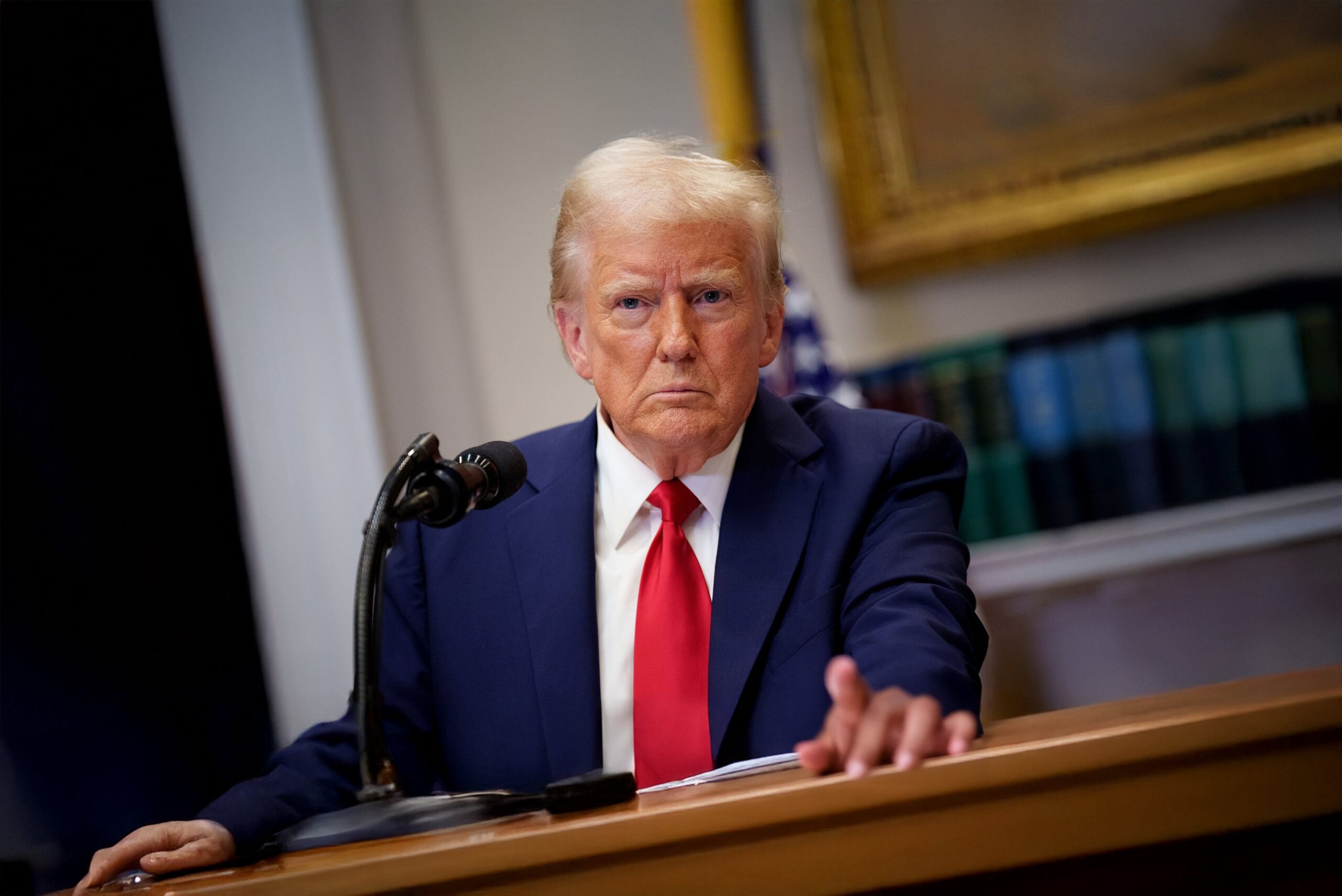
US President Donald Trump signed an executive order that enforces a $100,000 fee on applicants to the H-1B visa programme. The order accuses the system of “abuse” and blocks entry unless the full payment is made.
Critics claim the H-1B programme harms American workers. Supporters, including billionaire Elon Musk, argue it helps the United States attract world-class talent.
Gold card opens a premium path
Trump also announced a “gold card” that offers fast-track visas for certain immigrants. The programme requires fees beginning at £1m.
Commerce Secretary Howard Lutnick stood with Trump in the Oval Office on Friday. “A hundred thousand dollars a year for H1-B visas, and major companies are on board,” he said. “Train graduates from American universities. Stop hiring outsiders to take our jobs.”
Long-standing limits on H-1Bs
Since 2004, the H-1B programme has capped applications at 85,000 per year. Previously, applicants paid administrative fees of about $1,500.
US Citizenship and Immigration Services revealed that applications for the next fiscal year dropped to 359,000. This represents a four-year low.
Amazon received the most H-1B approvals last year, followed by Tata, Microsoft, Meta, Apple and Google.
Small businesses fear collapse
Immigration lawyer Tahmina Watson warned that the fee could devastate her clients. Most of them are small businesses and start-ups. “Almost everyone’s going to be priced out,” she said. “This $100,000 entry point will destroy many.”
She added that companies usually sponsor foreign workers only when they cannot find qualified Americans.
Concerns over America’s competitiveness
Jorge Lopez, chair of the immigration and mobility group at Littler Mendelson PC, condemned the change. He said it “will halt American competitiveness in tech and across industries.”
Some companies may try relocating abroad, though such moves are often challenging.
Trump’s mixed history on visas
The H-1B programme has long split Trump’s allies. Some supported it, while critics such as Steve Bannon opposed it.
In January, Trump told reporters he understood both sides of the issue. On the campaign trail, he even promised green cards for graduates. “You need a pool of people for companies,” he told the All-In Podcast. “You must recruit and keep them.”
Previous restrictions during his term
In 2017, Trump signed an order to tighten scrutiny of H-1B applications. The measure focused on fraud detection.
Rejection rates climbed to 24% in the 2018 fiscal year. Under Barack Obama, rates stayed between 5% and 8%. Under Joe Biden, they ranged from 2% to 4%.
Tech companies strongly opposed the measures, warning they threatened growth and innovation.
Global impact led by India
The new fee carries global consequences. India, the largest source of H-1B applicants, fears severe disruption.
Analysts warn the restrictions could reshape hiring worldwide and drive investment away from the United States.
