


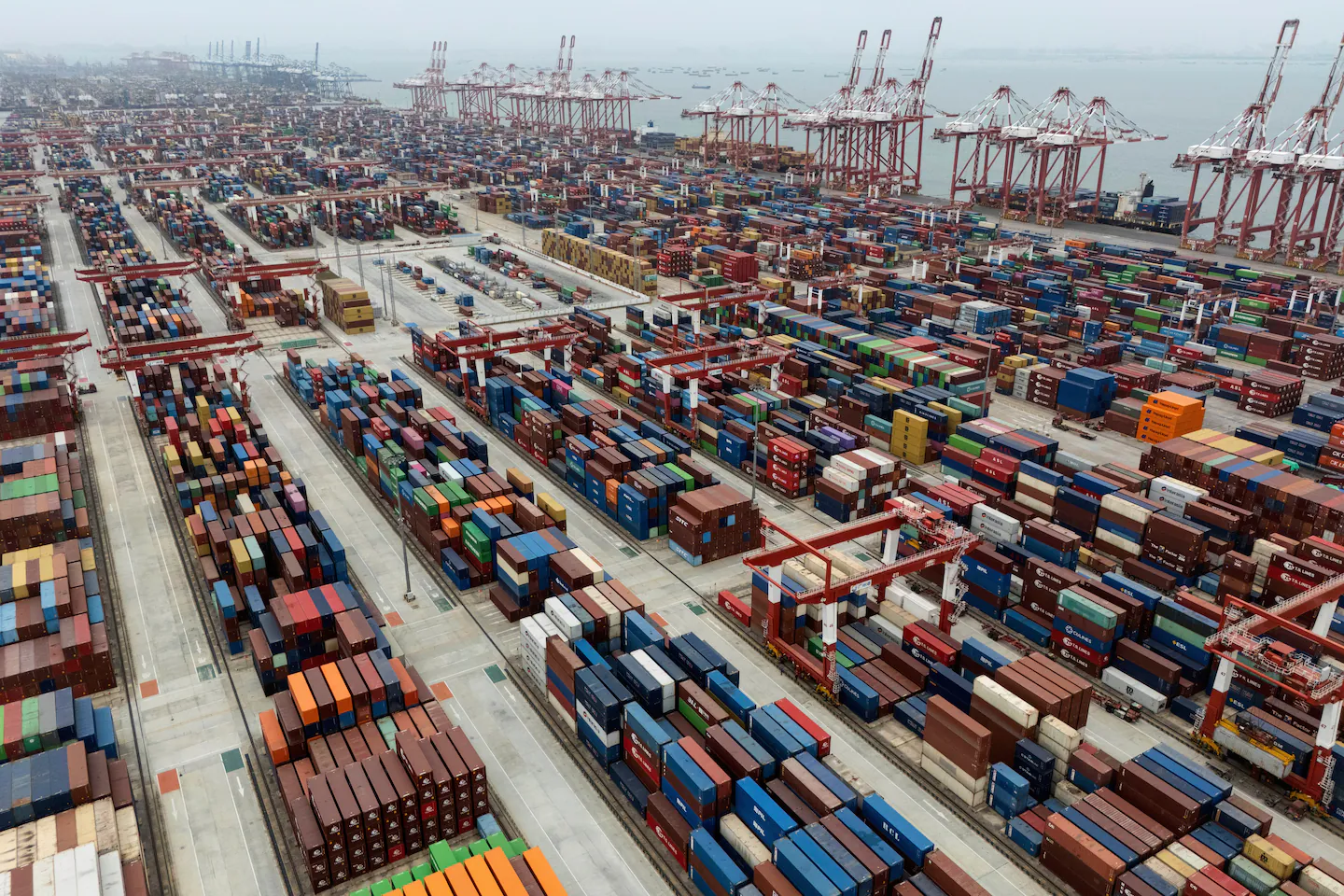
Many American companies in China expect weaker sales this year due to U.S. President Donald Trump’s tariffs and China’s countermeasures. A new survey by the American Chamber of Commerce in Shanghai highlights how rising trade tensions are reshaping business plans.
The annual survey included 254 U.S. firms. Nearly two-thirds said the tariffs have cut their expected 2025 revenues from China. Around one-third, mostly banks and service companies that do not rely on imports or exports, reported little or no effect.
The survey comes at a time when Washington and Beijing remain locked in trade disputes. Trump recently imposed an extra 30% tax on goods from China. Earlier this year, tariffs were lifted as high as 145% before both governments agreed in May to slow down their tit-for-tat measures. Beijing retaliated with a 10% tariff on American imports, further pressuring U.S. companies operating in China.
Manufacturers are bearing the heaviest burden. About three-quarters of them said their China revenues in 2025 would shrink because of higher import costs. Industries dependent on U.S. parts or raw materials, such as chemicals, face steep challenges. The added expenses make it harder to compete in the Chinese market.
“Tariffs have had a huge impact on our operations,” said Eric Zheng, president of the Shanghai chamber. He stressed that ongoing uncertainty makes it difficult for companies to plan for the future. Business leaders are calling for more clarity on trade policy, fearing that prolonged disputes could drive companies to shift supply chains out of China.
The legal picture is also unsettled. American courts have ruled that most of Trump’s tariffs are an illegal use of emergency powers. However, the taxes remain in place while the administration appeals to the Supreme Court. Until a final decision is made, companies continue to face high costs and unclear prospects.
Beyond immediate losses, firms see broader risks ahead. Survey respondents named U.S.-China relations as their top challenge for the next three to five years. They warned that unresolved tensions could harm long-term investments and partnerships in China. Zheng called improving ties between the two countries “our number one ask.”
Trade talks are ongoing, but it remains unclear whether either side will ease tariffs soon. The uncertainty leaves many companies in limbo. Without stable rules, businesses cannot confidently plan production, hiring, or investment strategies.
Experts note that the tariff disputes highlight deeper issues in the U.S.-China relationship. These include concerns about market access, intellectual property protection, and technology transfer. While tariffs dominate headlines, companies fear that unresolved structural tensions may lead to more economic friction in the years ahead.
The survey shows that U.S. companies in China are not leaving yet, but many are cautious. Some firms are looking at other markets in Asia to reduce dependence on China. Others are lobbying both governments to find a path forward that supports stability and growth.
For now, the reality is clear: tariffs are cutting into sales, squeezing profit margins, and raising doubts about the future of U.S. business in China. Unless trade tensions ease, companies will continue facing difficult choices about their operations and investments.
